

Best Places to Visit Near Nalsarovar Bird Sanctuary: A Traveller's Day-Trip Guide
Planning a trip around Nalsarovar? Discover the best day-trip destinations, temples, lakes, and heritage sites near Nalsarovar Bird Sanctuary in Gujarat.
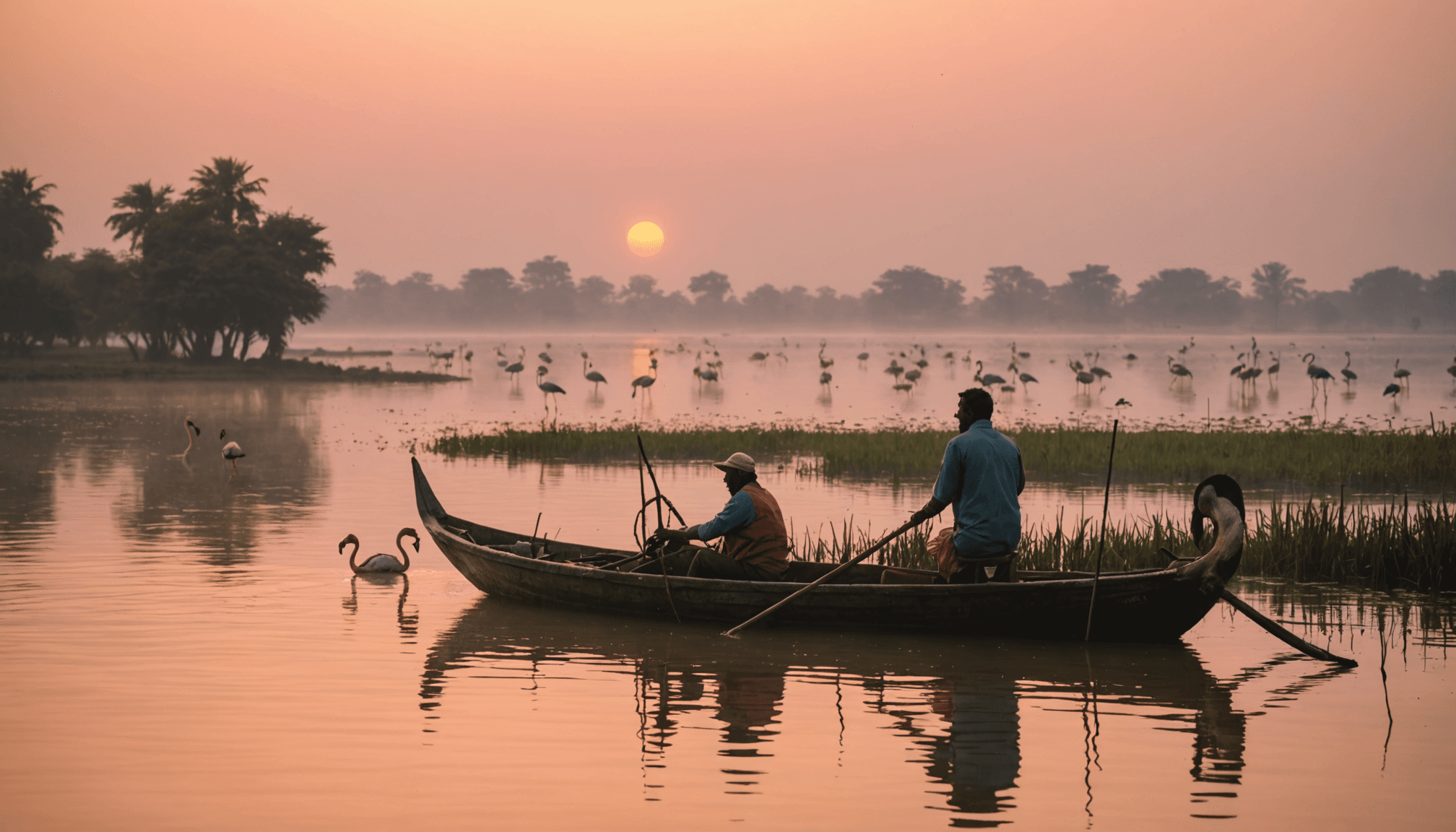
Most visitors to Nalsarovar Bird Sanctuary arrive before sunrise, spend the morning on a boat watching flamingos and pelicans drift across the water, and then face the same question by 11 a.m.: what next? The wetland is extraordinary, but the region around it rewards exploration just as much. Gujarat's Saurashtra and central plains are dense with stepwells, ancient temples, fortified towns, and wildlife corridors — and Nalsarovar sits at a convenient crossroads for all of them.
This guide is for travellers who want to stretch a Nalsarovar visit into a richer, multi-destination trip. Whether you have a single afternoon to spare or a full extra day, the destinations below offer genuine variety — from Ramsar-listed wetland ecology to centuries-old heritage architecture — without requiring a long detour.
Why the Nalsarovar Region Rewards Slow Travel
Nalsarovar itself covers roughly 120 sq km of shallow lake and marshland, and the birdwatching window is tightest between November and February. But the broader district has a quieter rhythm that suits unhurried travellers: roads are generally uncrowded by mid-morning, local dhabas serve fresh Gujarati thali at honest prices, and the landscape — flat, open, and punctuated by water bodies — makes for easy, low-stress driving.
Guests staying at Om Sanctuary Palace by Hotshot Hotelier Hospitality are particularly well-placed to plan day trips, since the property sits close enough to the sanctuary to allow an early birdwatching start and still have most of the day free. The front desk team can help point you toward current road conditions and local timings — a practical advantage over navigating the area cold.
Nal Sarovar Bird Sanctuary: Get the Most from Your Visit First
Before heading outward, make sure you've done justice to the sanctuary itself. The best time to be on the water is between 6 a.m. and 9 a.m., when bird activity peaks and the light is ideal for photography. Boat rides are arranged from the main jetty, and it's worth hiring a local boatman who knows the nesting zones — they spot species that casual visitors miss entirely.
If you're visiting between November and February, you may see flamingos, painted storks, purple moorhens, and several species of duck and wader in a single outing. The sanctuary is also a wintering ground for migratory birds from Central Asia and Siberia, which makes it genuinely world-class for birders.
Once you're back on shore by mid-morning, you have a natural transition point to explore what lies beyond. Check out the Explore Nalsarovar page for orientation before you go.
Lothal: An Indus Valley Civilisation Site Worth the Drive
Lothal is one of the most significant archaeological sites in South Asia — a well-preserved township of the Indus Valley Civilisation dating back over 4,000 years. The site includes what archaeologists believe to be one of the world's earliest dockyard structures, along with excavated streets, bead workshops, and a small but well-curated museum on site.
For travellers with a curiosity about history, Lothal is a genuinely moving place to walk through. The scale of the ruins is modest, but the quality of interpretation at the museum makes the context clear. Plan for two to three hours including the museum. It's a manageable drive from the Nalsarovar area and fits naturally into an afternoon after a morning at the lake.
Rani ki Vav, Patan: Gujarat's Finest Stepwell
A UNESCO World Heritage Site, Rani ki Vav (Queen's Stepwell) in Patan is one of the most elaborately carved stepwells in India. Built in the 11th century, it descends seven storeys into the earth and is lined with over 500 principal sculptures and nearly 1,000 minor ones — mostly depicting Vishnu avatars and celestial figures. The geometry of the structure, combined with the quality of the stonework, makes it unlike anything else in the region.
Patan also has the added draw of Patola silk weaving — a double ikat textile tradition that is among the most technically demanding in the world. A handful of weaving families still practice it, and a visit to a workshop is both educational and a chance to buy something genuinely rare.
Given the drive distance, Patan works best as a dedicated half-day or full-day excursion rather than a quick stop. If you're planning a longer stay in the Nalsarovar area, this is the day trip to anchor your schedule around.
Modhera Sun Temple: Architecture and Alignment
The Sun Temple at Modhera, built in 1026 CE by the Solanki dynasty, is designed so that the sun's rays fall directly on the deity's image at the equinoxes. The main shrine, the assembly hall, and the stepped tank in front form a coherent complex that demonstrates a sophisticated understanding of solar geometry.
Modhera is quieter than more famous Gujarat heritage sites, which means you can often walk through the complex without crowds. Early morning light on the carved exterior is particularly striking. The site is well-maintained by the Archaeological Survey of India, and entry fees are modest.
Combining Modhera and Patan in a single day is possible but requires an early start and efficient timing — worth it if you have a strong interest in medieval Gujarat architecture.
Thol Lake Bird Sanctuary: A Quieter Wetland Alternative
For birders who want a second wetland experience with a different character, Thol Lake Bird Sanctuary offers a more compact and accessible alternative to Nalsarovar. It's a freshwater lake that attracts a range of resident and migratory waterbirds, and because it's smaller, sightings can feel more intimate.
Thol is a useful option if you're travelling with family members who found Nalsarovar's boat rides a bit long, or if you want a relaxed afternoon walk along a lake shore rather than another boat excursion. The sanctuary is also a Ramsar site, which reflects its ecological importance despite its smaller footprint.
Practical Tips for Day Trips from Nalsarovar
- Start early at the sanctuary. Being on the water by 6:30 a.m. means you're done by 10 a.m. and have a full day ahead.
- Hire a local driver for multi-stop days. Roads between Nalsarovar, Lothal, Patan, and Modhera are navigable, but having a local driver removes the stress of navigation and parking.
- Carry water and snacks. Facilities at heritage sites vary; Nalsarovar's main jetty area has basic refreshments, but options thin out quickly once you're on the road.
- Check seasonal access. Some roads near the sanctuary can be affected during and immediately after monsoon season. The team at the property can advise on current conditions.
For a curated view of what the wider area offers, the Nearby Attractions page has a useful starting point for planning.
Staying Near Nalsarovar: Why Location Matters
The logistics of visiting multiple sites in this region are much simpler when you're already based close to the sanctuary. Driving in from Ahmedabad for a single day means arriving tired and leaving before you've seen the best of the area.
Om Sanctuary Palace by Hotshot Hotelier Hospitality offers accommodation right in the Nalsarovar belt, which means you can be at the jetty at first light, return for breakfast, and still have a full day for Lothal or Patan. The Packages page lists stay options that can be tailored around a multi-day itinerary — a practical choice if you're serious about covering the region properly.
For families, couples, or solo travellers who want to balance wildlife with culture, the combination of Nalsarovar plus one or two of the destinations above makes for a trip that's genuinely hard to replicate anywhere else in Gujarat. Browse accommodation options to find the right fit for your group.
Conclusion
Nalsarovar is the anchor, but the region around it is the full picture. From the Indus Valley archaeology at Lothal to the medieval grandeur of Rani ki Vav and the solar precision of Modhera, the destinations within reach of the sanctuary are among Gujarat's most rewarding — and they're rarely as crowded as the state's headline attractions. A two- or three-night stay gives you the time to do them justice, with early mornings on the water and afternoons spent in history. Contact the team to start planning your itinerary.
Frequently asked questions
What is the best time of year to visit Nalsarovar Bird Sanctuary?
November through February is the peak season, when migratory birds from Central Asia and Siberia join resident species. Flamingos, painted storks, and waders are most visible during these months.
Is Lothal worth visiting from Nalsarovar?
Lothal is one of the best-preserved Indus Valley Civilisation sites in India and makes an excellent afternoon excursion after a morning at the sanctuary. Allow two to three hours including the on-site museum.
Can I visit Rani ki Vav and Modhera in the same day?
It's possible with an early start, but both sites deserve unhurried time. A dedicated day for Patan (Rani ki Vav and Patola weaving) and a separate morning for Modhera gives a better experience.
What is Thol Lake Bird Sanctuary, and how does it compare to Nalsarovar?
Thol is a smaller, freshwater Ramsar-listed wetland that offers a more compact birdwatching experience. It's a good complement to Nalsarovar for birders who want a second wetland with a different feel.
Is it better to stay near Nalsarovar or drive in from Ahmedabad?
Staying near the sanctuary is strongly recommended. It allows you to reach the jetty at first light — when birdwatching is best — and still have time for day trips to Lothal, Patan, or Modhera.
Are there family-friendly day trips near Nalsarovar?
Lothal's archaeological museum is engaging for older children, and Rani ki Vav's sculpted stepwell is visually striking for all ages. Thol Lake offers a relaxed lakeside walk suitable for families.
What should I carry for a day trip from Nalsarovar?
Carry water, snacks, sunscreen, and a hat — facilities at heritage sites and along rural roads can be limited. A local driver is useful for multi-stop days to handle navigation and parking.